Together with Dr. Kori Czuy (Manager, Indigenous Science Connections) and Dr. Mathew Swallow (Associate Professor in Soil Sciences, Mount Royal University), we have collaboratively written an article published in The Conversation (later republished in the Globe and Mail, Phys.org, and Yahoo News).
The original, preprint version of this article is here.

We are the product of history while also being the producer of history. So are soils. Soils have lived histories and stories to tell. They are alive. Soil exists as a varied continuum across Earth’s surface reflecting the intersection of air, water, rock and life linked by the passage of time. If we closely look at the ground underneath us, we can see the diversity of form soils express, which reflects the environment they experience throughout their existence. The soil can tell stories of their past to anyone who has the patience and openness to listen. We humans are in a dependent partnership with soils and rely on their ability to provide a stable supply of food, clean water, and clean air. Yet despite our reliance on soil, humans entrenched in colonial mindset and systems have been poor soil stewards and generally ignorant to our destructive and extractive practices we inflict on soil to sustain our modern existence. We are now at a crisis point in our shared history with soil and the land. Only by understanding our past and current relationship with soil can we reflect and change our partnership with soil from extraction and exploitation to respect, relationality, and reciprocity. Whether we know it or not, soils are our silent partner that sustains us. What will our lasting legacy be in the story soil tells?
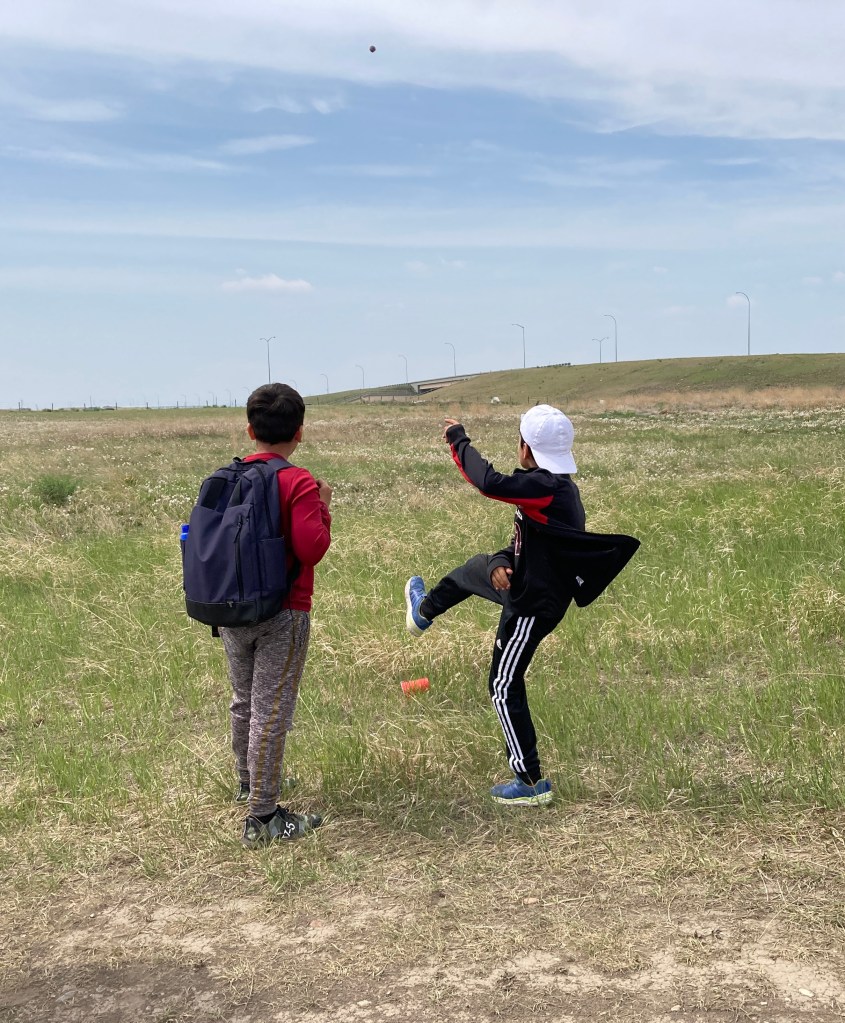
Over the past three years, we have worked with our community partner, “Land of Dreams,” which is in southeast Calgary toward socioenvironmental justices; lands that have been traditionally stewarded by the Niitsitapi, Îethka Nakoda, and Tsuut’ina Nations, and more recently Métis Nation Region 3. Digging deeper into this land shows us various portraits. Within the 30 acres of the land, we encounter various faces of the soil shaped through the factors of climate, biotic effects, topography, parent material and time. The area is traditionally the prairie pothole region, typified by a mosaic of gentle topography grasslands and wetlands. Before European colonization, Indigenous communities had long histories of stewarding the land and were living reciprocally with the soil. The vision of the Land of Dreams is to create the place where refugee communities who are forcefully displaced from their land gather and reconnect to the soil through their familiar small-scale agricultural practices, while learning about the Indigenous ways of stewarding the land. Enacting this vision requires careful listening to stories of the soil revealed through Indigenous wisdoms and deep disciplinary knowledge.
We try to imagine, from the soil’s point of view, how detrimental impacts from the colonial legacy could have been. A visual history of this land over the past 75 years can be readily seen using the Calgary Imagery database. Until 2009, the soil experienced the extractive effects of degenerative agriculture. The cycle of harvest likely involved the disruptive effects of annual soil tillage, vehicle traffic and the application of biocides for plants and animals deemed as pests. In 2010, the soil likely experienced the largest occurrence — their life-rich surface was stripped and they were pressed with heavy traffic from earthmoving equipment for the construction of a highway. This event caused “soil compaction,” where the soil pores are pressed together, and the soil resembles a rock-like density similar to how the soil was following the melting of the last glaciers. In this single event, human activity reset the thousands of years that it took for the soil to be a space where life can thrive in harmony with the local climate.
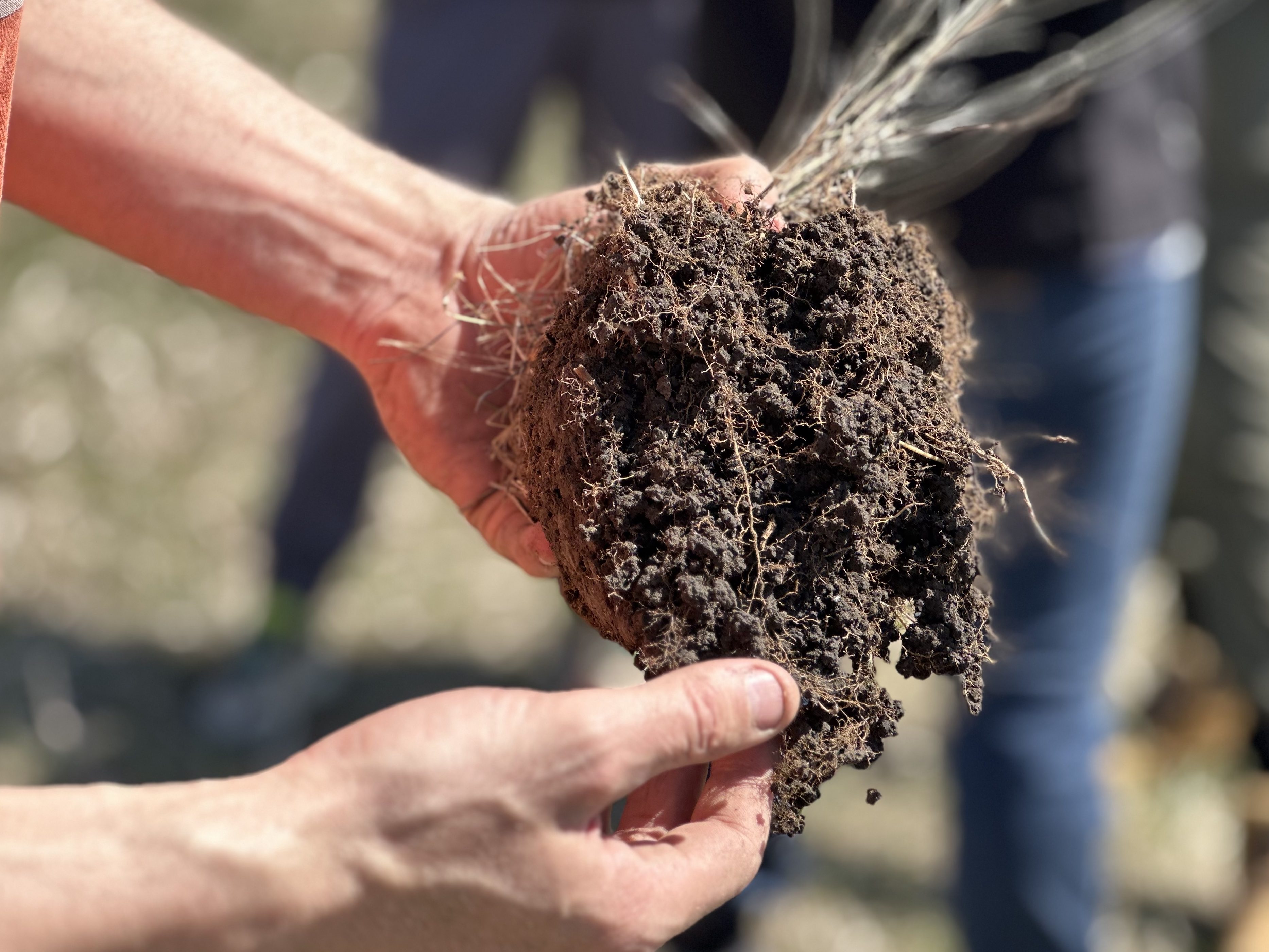
However, this is a chapter but not the end of the soil’s story. Despite the compaction causing the soil’s surface to be dry and dusty, some plants still grow. Ironically, plants such as dandelions and thistles that were carried here alongside European colonization also thrive on the soil impacted by colonial legacy. There remains some of the soil of the pasture that continues to act as a refuge of native plants and animals, patiently watching the dandelions and thistles and waiting for a time when the compacted soil will be able to welcome them back. As does the soil of the nearby wetland that, despite years of being forced into agricultural production, quickly resumes their place as a home and provider to countless insects, birds, frogs, plants, and mammals when left to be itself. Over a great deal of time the compacted soil will recover, but they will never be the same. Our relationship will carry the stories of disturbance and compaction and of resilience and recovery.

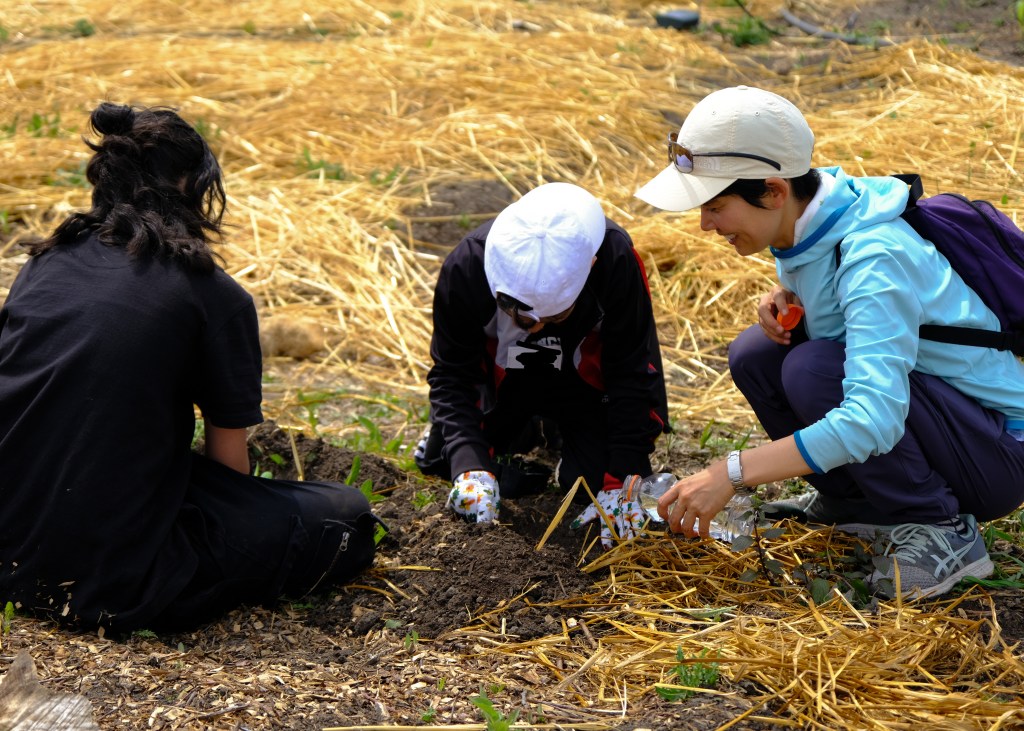
As we envisage our future relationships with the soil, which is reciprocal and relational, we should let the land guide us, and we should listen to the soil as our teacher and relative. Currently, at Soil Camp, together with youth, children and teachers, we are exploring what more soil-centric relationships could look like in action. Despite their central role that soils plays in the ecosystem and for essential societal issues such as food security, school curriculum does not fully teach young minds about the soil. Without our ability to listen to the stories of the soil, we as humans might destroy the abundance of the soil which nests countless lives.
We invite you, the next time you are walking on a sidewalk, a well-used trail in an urban park, or your backyard, to take a moment to think about the land and soil under your feet. Imagine what it was like 5, 50, 5000 years ago? What or who has caused that change? Is the soil still connected with its relatives the worms, leaves, squirrels? How can we as humans take action to be a better partner for the soil?
 Miwa Aoki Takeuchi, PhD